Tagged: Scams Toggle Comment Threads | Keyboard Shortcuts

  • Greg Collier 8:00 am on August 19, 2019 Permalink | Reply
    Tags: , , Scams   

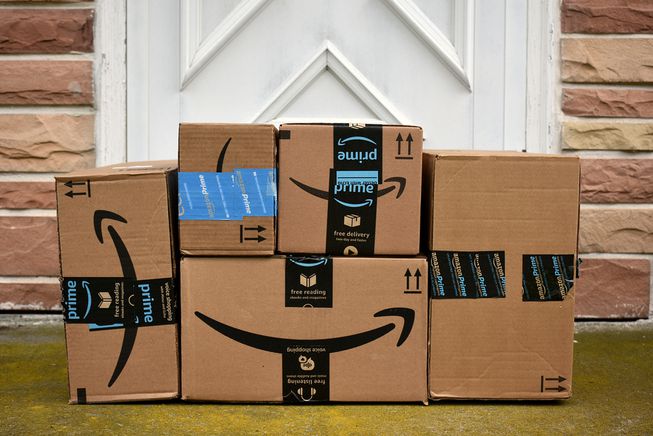
    When free stuff from Amazon isn’t free 

    When free stuff from amazon isn't free

    We’ve briefly touched upon the brushing scam before. In the brushing scam, a third-party amazon vendor will send you items for free that you didn’t actually order. Legally, you’re allowed to keep anything that you didn’t order. Sounds like a good deal right? Who doesn’t want to get free stuff? As with most things that sound too good to be true, there is a more deceitful plot at hand. A plot that could cost you money and your privacy in the long run.

    According to the Better Business Bureau, if you’re receiving these packages it’s more than likely that your Amazon account has been compromised. These third-party vendors are usually from overseas and are sending you the packages to make it look like you’re a verified purchaser. This way the vendors can post positive reviews of their product on Amazon in your name. This is intended to gain a higher ranking on Amazon which in turn is supposed to lead to more sales. Just think of the amount of information contained in your Amazon account. Not only is your home address listed within, but your payment information as well. These supposedly free items could be costing you without you even noticing it at first.

    [youtube https://www.youtube.com/watch?v=6JLJBbZ2yno%5D

    So, what should you do if you start receiving these unsolicited deliveries? The first thing you should do is immediately change the password on your Amazon account. Since the scammers may have also compromised your email account you may want to consider changing the email address attached to your Amazon account also. These deliveries should also be reported to Amazon itself so they can take down any fake reviews in your name which is against their policy. If any of your debit or credit cards have been used in this scam you’ll want to cancel them and have new ones issued. The only consolation to the victim of this scam is that they can legally keep the items sent to them, however, they’re usually not the type of items you’d normally want to keep.

     
  • Greg Collier 8:00 am on August 15, 2019 Permalink | Reply
    Tags: , Scams, , ,   

    New scam threatens your family with violence! 

    New scam threatens your family with violence!

    This scam we just recently heard of is so disturbing we don’t even have a clever name for it yet. In it, some scammers called a man from Brooklyn, New York, threatening to kill the man and his family if he didn’t pay them money. The scammers claimed to be from a criminal cartel and then sent the man explicitly violent pictures with claims of this is what would happen to his family if he didn’t pay. The man was hesitant to go to the police, however, he did contact a local community leader who was able to contact authorities. Police say that they have received other reports of this scam and that the scammers are casting wide nets trying to find victims. If you receive one of these calls you should hang up and contact police.

    Social security scams are still on the rise due to the fact that a number of senior citizens aren’t aware of the many scams that specifically target them. The Washington Post is reporting on a scam where the scammers posed as the Social Security Administration (SSA) and threatened to cut off the benefits of a woman in the early stage of Alzheimer’s. She was instructed to buy over $3,000 in gift cards from various merchants to have her benefits restored. One store even tried to warn her that this sounded like a scam. The Post article has a great checklist of things you can do to help senior relatives avoid this scam including sharing these stories every time they come up in the news. They also provide a link to the Federal Trade Commission’s website that has information about all types of impostor scams.

    The last scam for today is a reminder that most scams just don’t go away. We’ve talked about the secret shopper scam many times now. In this scam, ads will be posted hiring for secret shoppers which is a legitimate position with many retail companies. However, the con artists placing these ads online are trying to swindle you by sending you phony checks to use in your new position. They’ll tell you to deposit the checks to use in your secret shopping and send a portion of the check back. Once the bank finds out that the check is a fraud the victim who deposited the check into their bank account is responsible for the entire amount. This recently happened to a college student in Baton Rouge, Louisiana. If you’re considering a secret shopping position always consult with the Mystery Shopping Providers Association’s website before giving out your personal information.

     
  • Greg Collier 8:00 am on August 13, 2019 Permalink | Reply
    Tags: back to school, , , , , , Scams, ,   

    It’s the season for Back to School scams 

    It's the season for Back to School scams

    With September approaching and some schools having already started their school year it should come as no surprise that scammers will even use the back to school season to try to target potential victims. The largest targets among these victims will more than likely be college students. Considering that many of these students will be away from home for the first time, they may not have the real-world experience to recognize a scam. Hopefully, with this blog post they can be better educated on which scams to look out for that could potentially harm their college experience.

    The Better Business Bureau of Florida recently put out a list of the most common scams for students to look out for and we can’t help but recognize a few of them. For example, the BBB warns of phony job scams. In these scams, the perpetrator will use a phony email address that spoofs that of the university. The student will be promised a phony job where they will be sent a check that will be more than they were promised. Of course, the check is phony but by the time the student sends back the money their bank will charge them the full amount of the bogus check. Another common scam that targets college students is the phony scholarship scam. Phony companies will guarantee students grants or scholarships in exchange for a fee. Most scholarships and grants can only come from the government or the school so avoid these promises at all costs.

    While the above scams are largely illegal there are some legal scams to look out for as well. Many credit card companies will offer their cards to incoming students, however, many of them have either high annual fees or interest rates. It’s very easy to obtain one of these cards then find yourself in a world of debt that you weren’t prepared for. Then there’s the locksmith scam where a student may lock themselves out of their housing or car and they’ll call the first locksmith that comes up in a web search. Those locksmiths may not be local and may charge you an exorbitant fee. It’s better to research for a local locksmith before you lose your keys so you can have a reputable one readily available should the need arise.

    For a more comprehensive list from the BBB about these scams and others you can click this link.

     
  • Greg Collier 8:00 am on August 9, 2019 Permalink | Reply
    Tags: , Dog The Bounty Hunter, Duane Chapman, Scams   

    You can’t scam The Dog 

    You can't scam The Dog

    We’ve talked about the phony check scam many times in the past. The gist of the scam is that the scammer will send you a forged or phony check for whatever reason and will try to get you to deposit the check into your bank account. The scammers will then try to get you to wire them the difference while telling you to keep a portion of the check. Inevitably, the check turns out to be phony and you get stuck with any money that is owed the bank. Meanwhile, the scammers make off with the bulk of their ill-gotten gains. It seems that no one is immune to this type of scam as scammers tried pulling this ploy on one of the last people you would want to.

    Duane Chapman is more famously known as Dog The Bounty Hunter. Not only did Chapman have a successful reality series but he rose to prominence when he apprehended wanted fugitive Andrew Luster in 2003. More recently, scammers sent a check to Chapman in the amount of $430,000 for an alleged speaking engagement in Dubai. Immediately, Chapman’s agent felt that there was something suspect about the check. The first thing was that the check had an address that went to an empty building in Sacramento, California while supposedly being from a company in Oregon. The other part that seemed odd was that Chapman and his agent were instructed to ‘donate’ half of the check back to the organization running the event. As you can guess, there was no event and the check was a bogus one.

    Sadly, this isn’t the first scam that Duane Chapman has had to endure recently. After the recent passing of his wife Beth, Chapman took to social media to warn people not to accept any friend requests that claim to be him. In some cases, fans of his had accepted the requests and later found themselves out of thousands of dollars.

    [youtube https://www.youtube.com/watch?v=QeqTwKmA-08%5D

    The fake accounts were asking for contributions while trying to capitalize on Chapman’s loss.

    Getting back to the phony check scam, Chapman’s team did everything right in uncovering this deception. First off, if someone sands you a check then asks you to send part of that sum back to them or a third party it’s likely a scam. If you’re still not sure, check the address from where the check was supposedly issued. Also, look for mismatched names from the people who have allegedly issued the check. Often the name on the check will not be from the person you would be talking to.

     
  • Greg Collier 8:30 am on July 31, 2019 Permalink | Reply
    Tags: , Equifax, , , , Scams   

    Just how bad are military romance scams? 

    Just how bad are military romance scams?

    In a military romance scam, the scammer poses as a member of the US military and target potential victims. Like in most other romance scams, they’ll have the victim believing they’re in some type of relationship before asking for money. These scammers are largely from Nigeria where many of the scammers claim that these scams pay more than honest work. It’s become such a problem that the Department of Defense has employees that constantly scan social media for phony military accounts and report them to the platform in question. The Army’s Criminal Investigation Command receives numerous complaints about these scams but since the scams actually involve civilians it’s out of their jurisdiction.

    If you’ve been following the news lately you may be aware of the settlement that credit reporting company Equifax has been ordered to give because of a massive data breach that happened in 2017. The Federal Trade Commission has ordered Equifax to pay $425 million to consumers affected by the breach. his has meant that you may be able to claim $125 from the settlement. Of course, where there’s a payout there’s likely to be a scam. Fake websites are popping up claiming to be the official Equifax settlement website. The goal of these phony websites is to either to get you to give up your personal information or pay for a settlement that will never come. The official FTC settlement site can be found at https://www.ftc.gov/Equifax.

    Speaking of payments, a number of news outlets are reporting about a bank scam that’s affecting consumers. In this scam, you’ll receive a text message warning you that there’s been fraudulent activity on your bank account. You’ll then receive a phone call that appears to be from your bank with someone asking you to input your PIN. Once you do this the scammers will have control of your bank account. It’s easy for just about anyone to spoof a phone number to make it look like it’s coming from your bank. If you receive one of these calls the best thing to do is hang up and call the bank at the official number listed on the back of your credit or debit card.

     
  • Greg Collier 8:02 am on July 26, 2019 Permalink | Reply
    Tags: , , , , , , , Scams   

    $4,000,000 stolen in romance scam by victim 

    $4,000,000 stolen in romance scam

    A woman in Northern Kentucky is accused of stealing in upwards of $4 million as part of a romance scam and has been arrested for the alleged theft. The thing is that even though she’s accused of stealing this large sum of money, she’s also the victim in this story. She was the one who was reportedly strung along by the scammers. Investigators say that she never kept any of her employer’s money and sent it all to someone she believed to be in a relationship with. This was after she had sent the scammers all of her own money. Now in most instances, you can’t find yourself in a position where you can embezzle large amounts of money like this without having some form of professional background meaning that even educated people can find themselves falling victim to a romance scam.

    In other scam news, residents of Southern California are being warned about a phony bond scam that has been plaguing the area. Some Sheriffs Offices have been receiving complaints about phony government agents calling residents and telling them that their Social Security numbers have been involved in various frauds. To avoid arrest the residents are being told to pay a bond. As can be expected in these type of scams, the residents are told that they can pay the ‘bond’ using gift cards such as Apple, Google Play, or WalMart gift cards. No government agency, whether it is local or federal, will ever ask you to pay any kind of fee using gift cards. If you are to receive one of these phone calls, it is recommended that you hang up immediately and contact your local police.

    Lastly for today, we have a reminder about the phony check scam. If you’re unfamiliar with this scam it’s one of the more prolific scams on the internet. Whether you’re trying to sell something online or applying for a job online, some unscrupulous scammer will send you a check and ask you to deposit the check in your bank account before sending them back the difference. The check is always a fake and once your bank discovers that, you’ll be on the hook for the money while the scammers make off with the funds. One of these phony checks recently targeted an online seller in North Dakota who was quick to notice the discrepancies in the scammer’s story. The texts they were receiving were from a California number while the check was mailed from New York and calls were coming from someone named Larry while the checks came from someone named Donna. If you ever feel like something is off when dealing with online sales and purchases it probably is.

     
  • Greg Collier 7:42 am on July 24, 2019 Permalink | Reply
    Tags: , , , Libra coin, Scams   

    Scammers have gotten out ahead of Libra’s launch! 

    Scammers have gotten out ahead of Libra’s launch!

    If you’re unfamiliar with cryptocurrency it’s essentially a form of digital currency that is not centralized through any bank or nation. Bitcoin is the most notorious of these cryptocurrencies. Since Bitcoin is decentralized its value has wildly fluctuated over the years. While there are those who have made a virtual fortune through trading BitCoin the cryptocurrency craze seems to be on a downswing as many competing cryptocurrencies looking to copy Bitcoin’s relative success have flooded the market. One of those cryptocurrencies is set to be launched by Facebook which they have dubbed Libra. While Libra is some time away from launching, that hasn’t stopped scammers from trying to take advantage of speculators by fraudulently using the Libra name.

    [youtube https://www.youtube.com/watch?v=u8y3SLfP7TI%5D

    According to reports, a wave of scammers has gotten out ahead of Libra’s launch claiming to be official sellers of Libra. Unfortunately, Facebook’s own platforms such as Instagram, Messenger, and Facebook itself are being used to perpetrate these scams. However, in Facebook’s defense, these scams have also spread to Twitter, YouTube, and the web at large with a number of websites claiming to be affiliated with Libra. Some phony outlets are even claiming to give discounts on millions of Libra coins. As you’ve probably guessed, these scams are designed to only take your money and give you nothing in return.

    Investing in cryptocurrency is like investing in any other financial market. You should only do it if you can afford to lose the money you invest as not all investments turn into profits. That’s not even taking into account that Libra seems more like a way to spend money globally rather than an investment type of cryptocurrency. So if you’re actually interested in using Libra once it launches, you’ll have to wait until 2020 before you can purchase any. No matter what someone online tries to tell you.

     
  • Greg Collier 8:00 am on July 22, 2019 Permalink | Reply
    Tags: , , , , , Scams, ,   

    Scam strikes vacation sites! 

    Scam strikes vacation sites!

    If you’re still looking to plan your vacation for this summer, you may want to be extra careful who you book your vacation with. The Better Business Bureau has been warning potential vacation-goers to make sure you use the proper travel website when booking travel plans. While most reports we’ve seen have mentioned Expedia, we imagine that this could happen with any well-known travel website. The scam works like a lot of phishing scams by posing as a website that looks identical to sites like Expedia but directs you to call a different number than Expedia’s actual number. The scammers will then tell you that their system is down and can you make payment using a prepaid debit card. That should be your red flag as once payment is transferred from that card the money is gone. Real travel platforms will never ask you to pay by prepaid debit card or gift card.

    [youtube https://www.youtube.com/watch?v=i55BR4RtAfQ%5D

    Speaking of the BBB, they’re also warning about a scam that’s currently happening in the Pacific Northwest. It appears that a genetic testing scam is happening there now. You may see commercials for services that promise to test your genetics to give you your ethnic makeup. Most of these are established services with decent reputations. However, there are scammers trying to cash in on this craze by coming to your door or setting up shop in senior centers. If you’re asked for any kind of medical insurance information such as your Medicare number it’s a scam. This particular scam is designed just to get your medical carrier information to be able to commit future insurance fraud with your information. This scam also tends to target those who are on Medicare or Medicaid.

    Lastly, we have a scam out of the Midwest where some Sheriffs Offices are warning residents about it. In this scam, you’ll receive a phone call from someone claiming to be a border agent from either the Canadian or Mexican border. These fake agents will say that a rental car registered in your name has been found with drugs in it. They’ll even try to say that your name has been connected with a drug cartel. The scammers will then try to ask you for financial information to try to clear the incident up such as your bank account or credit card numbers. If you receive one of these calls it’s recommended that you hang up immediately.

     
  • Greg Collier 8:00 am on July 19, 2019 Permalink | Reply
    Tags: , , , Scams,   

    Check out this bizarre double scam! 

    Check out this bizarre double scam!

    We’ve been telling you about numerous scams for some time now in order to help better protect consumers. Every so often we’ll post a story about a scam we’ve previously discussed to remind consumers that these scams are still out there. Occasionally we’ll post about a brand new scam that’s either brand new or one we’ve never heard of before. Then there are times like now where we bring you a scam so unusual it almost defies belief. One such scam just recently took place in the state of Kentucky where a woman was almost scammed twice by the same scammers using two different scams.

    The victim thought she was buying an iPhone online through a marketplace app. She paid $200 for the phone over the internet but never received the phone. Months later, she was contacted by someone posing as some kind of investigator. They showed her a copy of a receipt that was supposed to be for her phone and that the scammer had been caught and was being forced to pay restitution as part of a settlement. She was told that as part of the settlement she could receive $30,000 in compensation. Of course, there was a catch. All she had to do was wire some money to cover the costs of processing. Luckily, the woman’s mother warned the victim that this was nothing more than a scam.

    When dealing with marketplace apps that have no verified sellers, always deal locally and never send any money over the internet. Never wire any money either for any part of the transaction as marketplace apps are rife with wire fraud like this. Only deal locally and in cash. When you meet to make the transaction always do so at a local police station. With as great as a convenience online shopping can be, with marketplace apps there are too many variables that can’t be controlled.

     
  • Greg Collier 8:00 am on July 17, 2019 Permalink | Reply
    Tags: , , , , Scams, theme parks,   

    This scam takes advantage of Prime Day purchases! 

    This scam takes advantage of Prime Day!

    As we mentioned yesterday, Amazon just had its annual Prime Day sale. If you decided to take advantage of the deals to be had online you should be aware of a particular scam that looks to take advantage of all the orders made on Prime Day. It’s called brushing and some retailers will send you a product of their’s unsolicited and at no charge to you. They’re looking for favorable online reviews and even if sent to you free of charge, the vendor can consider you a ‘verified purchase’ on Amazon. The main problem with brushing scams is that someone may have purchased these items on yours on someone else’s stolen account.

    In other scam news, reports are coming out of Northern California about a parking lot scam designed to pressure you into giving a stranger money. Several residents have complained about a scam where someone walks behind your car in a parking lot as you try to pull out. The scammer will drop their phone then act like it’s broken, or more than likely they’ll have dropped an already broken phone. They’ll then try to claim it was your fault and try to get you to give them money for their phone’s insurance deductible. If this scam happens to you, it’s recommended that you call the police.

    While this next scam happens all year round with places like Disney World, it picks up in the summer months due to other regional theme parks being open for the season. If you see a post on social media promising you free tickets to a theme park or other attraction it is more than likely a scam. This happened recently in the Sandusky, Ohio area where the popular Cedar Point theme park is. This scam is intended to get either your personal or financial information which the scammers will say is necessary in order to get the tickets. They could even ask for a processing fee. In the end, the scammers end up with your information and possibly your money and you’re left with nothing.

     
c
Compose new post
j
Next post/Next comment
k
Previous post/Previous comment
r
Reply
e
Edit
o
Show/Hide comments
t
Go to top
l
Go to login
h
Show/Hide help
shift + esc
Cancel