Recent Updates Page 196 Toggle Comment Threads | Keyboard Shortcuts

  • Greg Collier 9:25 am on June 6, 2018 Permalink | Reply
    Tags: , ,   

    Why not choose charity when you can’t sell? 

    Why not choose charity when you can't sell?

    We often use classifieds sites like Geebo to not only make some money for ourselves but to also try to get rid of some of the clutter around our homes. However, what do you do when you have some items that you just can’t seem to sell? You always have the option of donating those items to charity.

    Money Talks News, by way of WTOL, has a great article on what charities could use what items. For example, building materials can be used by Habitats for Humanity. Mattresses in decent condition can be used by homeless shelters. Worn linens can be donated to local animal shelters to use as bedding for their animals that are up for adoption. Even older cell phones which are generally hard to sell can be donated to domestic abuse shelters so victims can contact their loved ones and have a lifeline to the outside world. The opportunities for donation are almost endless.

    Let’s not forget our local neighbors either. Often times there are people in need in your own community who may be in need of help who are too proud or too embarrassed to ask for help. There are many community driven websites that help you keep in touch with your local community on a personal basis and some of those people could use your donations. Also, check your nearby churches. While you may not be the religious type, many churches often have outreach programs for the needy that could use some of your donated items. Even if you’re only motivation is money, many donations to charity are often tax-deductible. However, when donating, make sure you’re giving to a legitimate charity as there are many scammers out there who are looking to prey upon the generous and kind-hearted. Even in charity, you should always do your research.

    Just the donation of something you might consider junk given to the right person or organization can mean the difference in the world to somebody who’s in need.

     
  • Greg Collier 9:03 am on June 5, 2018 Permalink | Reply
    Tags: ,   

    Facebook can’t stop sharing our data 

    Facebook can't stop sharing our data

    As it turns out, the Cambridge Analytica scandal wasn’t the first time Facebook allegedly shared personal user information to third-parties on a grand scale. According to a New York Times report, Facebook has been sharing extensive user information with device manufacturers for close to a decade if not more. Some of those companies are said to have included Apple, Amazon, BlackBerry, Microsoft, and Samsung.

    A Times reporter was supposedly able to use a 5-year-old Blackberry phone to access the personal information of close to 300,000 Facebook users. This ranged from friends to friends of friends and so on. Facebook hasn’t expressly denied that device makers didn’t have access to this information but instead claims that no information has been misused by any of its device partners. In response to this report, Apple has stated that it never requested any information from Facebook. Apple even took it a step further at their most recent developers conference when they introduced a new feature to iOS that would block Facebook’s tracking capabilities.

    Should we be surprised about this latest look at how Facebook handle’s our privacy? Probably not. Facebook isn’t a non-profit. They’re in business to make money. The way they make their money is through targeted advertising and for that Facebook needs as much of our personal information as possible. Yet, as Facebook users, we are more than happy to hand that information over to them just so we can satiate our social media addictions. Facebook won’t stop using our information until we stop supplying it to them.

     
  • Greg Collier 9:15 am on June 4, 2018 Permalink | Reply
    Tags: , , , ,   

    Backpage lawsuit against Cook County Sheriff dismissed 

    Backpage lawsuit against Cook County Sheriff dismissed

    Cook County (Ill.) Sheriff Tom Dart oversees law enforcement in the second most populous county in the country. He has long been an outspoken opponent of the website formerly known as Backpage. Not only did he dedicate a large part of his career to help rescue victims of Backpage’s trafficking, he also often took to the media to try to inform the public about how much of a menace Backpage actually was. Sheriff Dart was obviously relieved when Backpage was finally shuttered.

    One of Sheriff Dart’s more controversial acts against Backpage happened in 2015 when Sheriff Dart wrote to both MasterCard and VISA requesting they stop letting Backpage use their cards as forms of payment for Backpage’s adult ads. The problem with this is Sheriff Dart did not write to these companies as a private citizen but instead as the Cook County Sheriff by using official county letterhead. Backpage saw this as a violation of their right to free speech and a government intrusion. A lawsuit was then filed against Dart by Backpage and an injunction was placed on Sheriff Dart stating he could no longer contact the credit card companies. However, the damage had already been done as the two companies ceased doing business with Backpage. Many consider this decision by VISA and MasterCard as the beginning of the end for Backpage.

    Now, with Backpage being seized by the Federal Government and former CEO Carl Ferrer admitting that Backpage was well aware of its role in human trafficking, the lawsuit against Sheriff Dart has been dismissed. This past Thursday, a federal judge dismissed the suit with Sheriff Dart claiming that the dismissal contained a “certain level of vindication”. While we may not have always agreed with Sheriff Dart’s way of doing things, we’re happy to see that Backpage won’t be able to claim a victory over this tireless defender of the people.

     
  • Greg Collier 8:54 am on June 1, 2018 Permalink | Reply
    Tags: Emily Kennedy, Facesearch, , Marinus Analytics, , Traffic Jam   

    Facial recognition being used to help stop trafficking 

    Facial recognition being used to help stop trafficking

    Previously, we posted about how Amazon’s facial recognition software, called Rekognition, is being sold to police departments around the country. Many civil liberty groups have protested the police use of the software as they feel it is ripe for abuse. However, like many tools, one person’s abuse can be another person’s salvation. One startup is using the Rekognition software to help rescue victims of human trafficking.

    Marinus Analytics is a startup that was founded by CEO Emily Kennedy that develops tools to help stop human trafficking. While attending Carnegie Mellon University, Ms. Kenedy developed a program called Traffic Jam that uses artificial intelligence to help identify trafficking victims. What once could take a police investigator days to do, Traffic Jam could do in a fraction of that time. More recently, Marinus Analytics added a feature called Facesearch to Traffic Jam which is based on the Rekognition software. Facesearch allows police to use a photograph of a trafficking victim or missing person to the Traffic Jam database in order to help locate the victim. It’s the science of fantastical TV crime dramas come to life.

    Ms. Kennedy has even said with the federal seizure of Backpage, Traffic Jam will continue to adapt to new online sources. We commend Ms. Kennedy for her dedication and innovation in the fight against human trafficking and we’ll add that it’s refreshing to see a startup try to accomplish real change in the world rather than trying to cash in on whatever the latest social trend is.

     
  • Greg Collier 9:12 am on May 31, 2018 Permalink | Reply
    Tags: , , , sob story   

    Avoid the sob story when it comes to classifieds 

    Avoid the sob story when it comes to classifieds

    One of the most prolific ways online scammers try to prey on their victims is by tugging at their heartstrings. As long as online classifieds have been around con artists have been trying to fleece victims out of their money by posing as people who are generally trusted by their communities. For example, in many communities where many of its people are religious, con artists will pose as missionaries who are out of the country then try to either get you to pay them through a wire transfer or try to pay you with a phony over-the-price check. Another pervasive scam is someone posing as a member of the military.

    Recently, the Minneapolis StarTribune reported about a scam that hit almost all the sob story checkboxes. The scammer posted a craigslist ad that claimed to be selling a boat. When a prospective buyer contacted the scammer, the scammer not only claimed they needed to sell the boat by May 30th because they were supposedly being deployed overseas, but they also claimed to be going through a divorce. The scammer also claimed that the boat was being kept at an eBay warehouse and all transactions would be handled through eBay. If the sob story and rush to payment weren’t enough red flags, the eBay warehouse should be a dead giveaway. While vehicles can be bought and sold through eBay, they do not have warehouses. More than likely the scammer would have sent a fake email that would have looked like an official email from eBay, but in reality, the email would link to a website that looks like eBay but is a fake designed to get your money and your personal information.

    While there are many people out there who are in dire need of some kind of financial assistance, there are unfortunately those who look to prey on our spirit of generosity. Always do your research when coming across these situations online as a mistake could leave you in financial straits.

     
  • Greg Collier 9:06 am on May 30, 2018 Permalink | Reply
    Tags: , , , , stun gun   

    Bizarre OfferUp robbery in Oregon 

    Bizarre OfferUp robbery in Oregon

    A man and a girl were violently robbed in Tualatin, Oregon, after responding to an OfferUp ad for two cell phones. The buyers were instructed to bring the money in the form of a $1200 prepaid VISA card. When the card wouldn’t work the buyers and sellers went to a grocery store to try and withdraw money from the card which also didn’t work for some reason. Usually, when it comes to transactions like this through marketplace apps, prepaid VISA cards are used more for over the phone type scams.

    Possibly out of frustration, the sellers allegedly used a stun gun on the man and held the girl at knifepoint robbing them of whatever possessions the buyers had on them. At the time of this post, the suspects have yet to be apprehended. There was obviously some malice of forethought here since the sellers ended up robbing the buyers, but there were some red flags that something was not right with this proposed transaction.

    First off, anytime someone gives some kind of prerequisite on how they want to receive payment in a face to face transaction, there’s probably a scam in play especially when it comes to any type of prepaid VISA or gift card. Secondly, you should never travel to a secondary location on anyone’s insistence. Thieves usually use this tactic to get their victims away from the public eye and have resulted in tragic consequences. Lastly, meeting in a public place just isn’t the safeguard it once was as scammers and thieves have become increasingly bolder in recent years when it comes to their crimes. You should always insist on meeting at a police station as more police departments are encouraging people to use their monitored parking lots and lobbies as meeting places for these kinds of transactions. If the person you’re dealing with doesn’t want to meet their then more than likely they’re up to some kind of scheme where you could lose your money, be hurt, or worse.

     
  • Greg Collier 9:01 am on May 29, 2018 Permalink | Reply
    Tags: , ,   

    Is there a new site trying to usurp Backpage’s trafficking throne? 

    Is there a new site trying to usurp Backpage's trafficking throne?

    Recently, one of New York’s less than trustworthy and more opinionated newspapers ran an article claiming online sex trafficking hasn’t changed since the federal seizure of Backpage. The article claims an ‘unnamed source’ within the NYPD saying there has been no slow down since Backpage was shuttered. This newspaper seems to be one of the outlets that believe the ‘consenting adult’ myth as they quote a john who said that prostitution should be legal since gambling and marijuana are legal in some places. The problem with that analogy is marijuana and casino chips aren’t being repeatedly sold against their will.

    However, the article then goes on to not only mention a new website but links to the new site as well that is supposedly the sleazy heir apparent to Backpage. We’re not going to link to the article, the website, or mention the website by name, but the site looks like it’s trying to copy Backpage even right down to its site design. The ads on this new site seem to be even more blatant than the usually coded ads that appeared on Backpage. This new site also has the usual disclaimer that ads related to human trafficking will not be tolerated asking ad posters to click on a button that says ‘I agree’. They’re even trying to be more shifty than Backpage was. In my research, I was unable to find any information regarding who owns the new platform. Their social media presence is almost non-existent, however, I was able to find some information that the site does business in Texas although reports say the website itself is allegedly hosted in Canada.

    While the New York tabloids may be decrying that online sex trafficking has continued unabated since the closure of Backpage, it’s still too early to really tell. It’s only been less than two months since Backpage was seized so it’s still too early to say that it’s business as usual. At its height, Backpage was responsible for 80% of all online sex trafficking in the US by most reports and had the financial backing of a media company. In today’s post-FOSTA world it will be almost impossible for a website to be as lucrative as Backpage was at its zenith.

    The online sex trafficking trade has been severely splintered. While it may continue to exist it will never be at the level it was when Backpage was running things. This is a good thing despite protests to the contrary as it causes fewer victims to be trafficked against their will. While the fight against online human trafficking is a constant battle, there will be fewer casualties in the future.

     
  • Greg Collier 9:31 am on May 25, 2018 Permalink | Reply
    Tags: , banned, , returns   

    Amazon banning customers for too many returns 

    Amazon banning customers for too many returns

    Amazon offers a lot of incentives to get customers to try to use their service extensively. For example, Amazon offers its Prime membership to its users so the customer can have free shipping for the length of their membership, usually paid in an annual fee. Another one of those features was Amazon’s easy return policy. However, while Amazon wants you to order as many items as possible they’ll send out for ‘free’, don’t send back too many or you may not be an Amazon customer anymore.

    Reports came out this week that Amazon was banning customers who made excessive returns. Amazon claims it’s to prevent fraudulent returns but many customers say they were banned even though they made reasonable returns. Like too many tech companies, Amazon relies on an algorithm to identify potential abusers and only worries about false positives if the banned customer calls to complain. Apparently, Amazon lives by the edict that it’s easier to ask for forgiveness than permission.

    Let’s be honest, mistakes happen in all retail spaces. Sometimes you get the wrong order or the product wasn’t exactly what you imagined when you received it. Now let’s translate Amazon’s policy to brick and mortar space. For example, Walmart has a very generous return policy. You can almost return a half-eaten fish stick to Walmart without a receipt and still get a refund. Now imagine you returned too many things to WalMart and you were not only banned from your local store but also from all the other Walmarts in the country.

    Amazon would do well to remember who it is that allows them to make all those billions of dollars in profit before customers start leaving their service without being banned.

     
  • Greg Collier 9:08 am on May 24, 2018 Permalink | Reply
    Tags: , ,   

    Facebook: Our monopoly keeps you safe 

    Facebook: Our monopoly keeps you safe

    This past Tuesday, Facebook CEO Mark Zuckerberg appeared before the Parliament of the European Union to address concerns about user privacy among other matters. To the EU Parliament’s credit, they asked much more poignant questions to Zuckerberg than the sometimes clueless US Congress did. However, much like he did with Congress. Mr. Zuckerberg was largely evasive when it came to the big topics raised by the EU?

    One of the major topics that Mr. Zuckerberg seemed to constantly avoid was that of ‘is Facebook a monopoly?’ Zuckerberg would name platforms like Twitter and Google, but as one Parliament member pointed out, that would be like saying a car manufacturer that has a monopoly telling people they could take a plane instead. Mr. Zuckerberg closed his appearance stating that Facebook would respond to many of the EU’s concerns in writing and that they did, sort of. In addressing concerns that it is a monopoly Facebook issued a statement claiming that its dominance in the social media and messaging space keeps its users safe.

    The company answered Wednesday in an online post, saying there are “many consumer benefits” to having Facebook control so much of the world’s communication. “By working together we have been able to improve safety across all these services,” the company wrote. When Facebook sees spam, exploitative images or illegal content, for example, it can obliterate it on all platforms at once.

    Forgive us for beating a dead horse, but this sounds almost exactly like the claim Backpage used to make that they were a leading tool in the fight against human trafficking. A platform cannot be both the cause of and solution to a problem. As far as obliterating harmful content across all of its properties, Facebook can barely handle that as many people who have complained about harmful content are told that the content in question doesn’t meet their vague community standards for deletion.

    The European Union has a history of taking a dim view against corporations that appear to violate their antitrust guidelines and have ruled against companies that ended up having worldwide ramifications, just ask Microsoft. Could we see a similar blow made against Facebook? If history is any indicator, we will.

     
  • Greg Collier 9:51 am on May 23, 2018 Permalink | Reply
    Tags: , facial recognition,   

    Is Amazon watching us? 

    Is Amazon watching us?

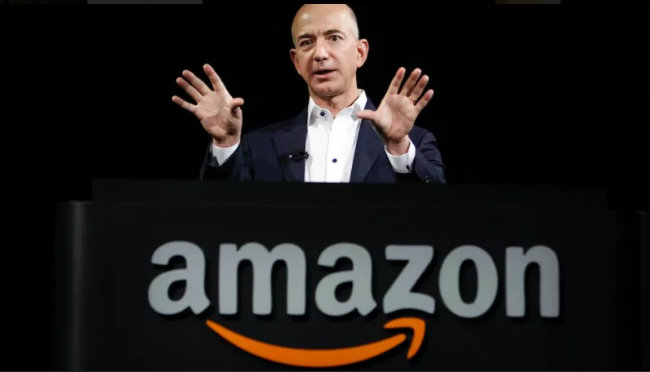
    Amazon CEO Jeff Bezos not looking Orwellian at all.

    Ever since George Orwell published his dystopian novel 1984 it’s become a cliché to accuse whatever political party you’re opposed to of being Big Brother. What if it’s not the government you have to worry about surveilling us without our knowledge? Instead, what if it’s one of the largest corporations in the world? Amazon has found itself amid a controversy lately after many civil liberty groups have called upon Amazon to stop selling its facial recognition software called Rekognition to police departments around the country.

    Now the advantages and drawbacks to law enforcement using such software can be debated ad nauseam. However, when you combine this Amazon technology with some other aspects of Amazon’s business a disconcerting picture starts to form. For example, how many of us have Amazon Echo’s in our homes with its microphone always listening for the command word from its user? Amazon claims the units aren’t recording our ambient conversations but that could potentially change at any time with just a firmware update.

    Yet the most ominous aspect of Amazon’s business holdings is the fact that Amazon CEO Jeff Bezos owns one of the country’s most respected media outlets in the Washington Post. Jim Morrison once said that “Whoever controls the media controls the mind” while Orwell himself said “Who controls the past controls the future. Who controls the present controls the past.” While we’re not ones to usually indulge in conspiracy theories, separately these actions by Amazon can be seen as benign, but when looked at as a whole it shows a potential future where corporate monoliths can become so overreaching into our lives they could have almost unparalleled influence in our daily lives.

     
c
Compose new post
j
Next post/Next comment
k
Previous post/Previous comment
r
Reply
e
Edit
o
Show/Hide comments
t
Go to top
l
Go to login
h
Show/Hide help
shift + esc
Cancel